
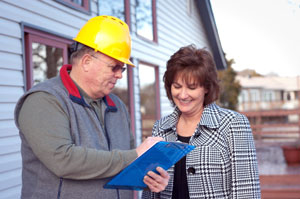
You should consider a 203(k) mortgage if you want to purchase a home that needs rehabilitation.
The top three benefits of a 203(k) program include:
1. Higher Loan Amounts: The 203(k) mortgage is based on the home's potential value (after repairs), not its existing value. This means you can be approved for a higher loan than if you were taking out a mortgage based on your home's current worth.
2. Simplicity: Without a 203(k) mortgage, if you wanted to buy a house that needed rehabilitation, you'd have to finance every step of the purchase and rehabilitation separately. This means you'd first have to get a loan to buy the home, and then find additional financing to cover the rehabilitation costs, and finally obtain a permanent mortgage after completing the rehabilitation. With the 203(k), you roll all these loans into one easy-to-manage mortgage.
3. Better Security: Without the help of a 203(k) mortgage, you have to just hope that all the money you spend on rehabilitation costs will be less than the value of the home after repairs are complete—and that you won't have to cover any unexpected costs out-of-pocket. A 203(k) mortgage covers the cost of repairs from the outset. Also, the mortgage usually carries a long-term-fixed rate, is insured as soon as the loan funds, and has an escrow account set up for the repairs.
Are there Restrictions?
There are some restrictions. For example, the home you want to purchase must be a one-to four-family dwelling that has been on its foundation for at least one year. The number of units must adhere to local zoning requirements. Any newly constructed units must be affixed to the existing home.
The 203(k) Mortgage Program By Antonia Anderson Photo: © William Britten - iStockphoto


No comments:
Post a Comment